
Walking for Weight Loss: The Science of How Many Steps You Actually Need
📑 Table of Contents
Walking for Weight Loss: The Science of How Many Steps You Actually Need
You’ve heard it a million times: walk 10,000 steps a day and the weight will melt off. But here’s the truth — that number was made up by a Japanese pedometer company in 1964 as a marketing slogan. It had zero science behind it. And yet, decades later, we’re still chasing it.
Here’s what the actual research says: walking is one of the most underrated tools for weight loss, but the magic number is probably lower than you think. A brand-new 2026 meta-analysis presented at the European Congress on Obesity found that walking about 8,500 steps per day was the key to maintaining significant weight loss over time. And health benefits start at as few as 2,500 steps.
This article was informed by real-time trending data — YouTube fitness walking videos are surging, Google Trends shows “weight loss” as a consistently top-searched topic, and the latest RSS research from ScienceDaily and Medical Xpress confirms that step-count science keeps evolving. Let’s cut through the marketing myths and look at what the evidence actually says.
What the Science Says About Step Counts and Weight Loss
The most comprehensive analysis to date comes from a 2024 umbrella review published in the Journal of the American College of Cardiology that pooled data from 12 studies covering 111,309 participants who wore accelerometers. Related: Eat These to Burn Belly Fat Like Crazy: 10 Proven Foods for a Flatter Stomach The findings were clear:
- Health benefits begin at just 2,500 to 2,700 steps per day — that’s a 8% reduction in all-cause mortality and 11% lower cardiovascular risk
- At 7,000 steps, cardiovascular disease risk drops by 51%
- At 9,000 steps, the risk of early death is reduced by 60%
This matters for weight loss because walking isn’t just about calories burned in the moment. It’s about creating a sustained, low-impact habit that improves your metabolic health across the board. When your cardiovascular system works better, your body becomes more efficient at burning fat for fuel — even at rest.
The 10,000-step target? It’s not wrong — it just overshoots what most people need. Walking 10,000 steps burns roughly 300 to 500 calories for the average adult, depending on body weight and pace. That’s great, but you can get 80% of the health and weight loss benefits at 7,000 to 8,500 steps. And for someone currently sedentary, jumping straight to 10,000 is a recipe for burnout.
The 2026 Study: 8,500 Steps for Weight Loss Maintenance
Here’s the most relevant study for anyone trying to lose weight. In May 2026, researchers from the University of Modena and Reggio Emilia presented a systematic review and meta-analysis at the European Congress on Obesity. They analyzed randomized controlled trials where adults with obesity followed lifestyle modification programs that included walking.
The results were striking:
- Participants in the lifestyle modification group walked an average of 8,454 steps per day during the weight loss phase
- They lost 4.39% of their body weight (about 4 kg or 8.8 lbs)
- During the maintenance phase, they sustained 8,241 steps daily and kept off 3.28% of their weight
- The control group — who didn’t increase their steps — lost no weight at all
The researchers, led by Dr. Marwan El Ghoch, concluded: “Increasing the number of steps walked to 8,500 each day is a simple and affordable strategy to prevent weight regain.”
Why does this matter so much? Because more than 50% of people who lose weight regain it within two years. Walking 8,500 steps isn’t just about losing weight — it’s about keeping it off.
How Walking Changes Your Body
Walking triggers several physiological changes that directly support weight loss. Understanding why it works makes it easier to stick with.
Walking Burns Calories (And Keeps Burning)
One study found that walking one mile burns about 107 calories on average. That might not sound like much, but compound it over days and weeks. Walking 45 to 60 minutes a day, five days a week, can lead to 5 pounds of weight loss in two months for a sedentary person — even without dietary changes.
Walking Preserves Lean Muscle
When you lose weight through diet alone, about 25% of the weight loss comes from muscle — not fat. That’s a problem because muscle tissue burns more calories at rest than fat tissue. Walking helps preserve lean muscle mass during weight loss, which keeps your metabolism running higher.
Walking Reduces Belly Fat
Visceral fat — the dangerous fat stored around your organs — is particularly sensitive to moderate-intensity exercise like walking. A study published in the Journal of Diabetes Investigation found that 12 weeks of walking significantly reduced visceral fat in overweight adults. Walking for weight loss around the belly area works because it improves insulin sensitivity and reduces cortisol, both of which drive belly fat storage.
Walking Improves Your “Fat-Burning” Machinery
Regular walking increases the number and efficiency of mitochondria in your muscle cells. More mitochondria means your body gets better at using fat as fuel. Over time, your metabolism literally becomes more efficient at burning fat — even when you’re sitting still.
The NEAT Factor: Why Walking Matters More Than the Gym
There’s a concept in metabolic science called NEAT — Non-Exercise Activity Thermogenesis. It’s the energy you burn through all movement that isn’t structured exercise. Walking to your car, standing while talking on the phone, fidgeting, climbing stairs — all of it counts.
Here’s the surprising part: NEAT can account for 15 to 50% of your total daily calorie expenditure — often more than formal exercise. Research from the Mayo Clinic shows that NEAT varies by up to 2,000 calories per day between different people of similar size. The difference comes down to how much you move throughout the day, not how many gym sessions you squeeze in.
This is why walking is such a powerful weight loss tool. It’s not a 30-minute activity you check off a list. It’s a lifestyle change that increases your total daily movement across every hour you’re awake. People who walk more throughout the day — parking farther away, taking the stairs, walking during phone calls — burn hundreds of additional calories without it feeling like exercise.
The Obesity Medicine Association’s 2025 clinical guide calls NEAT “a new strategy to increase energy expenditure and manage obesity.” The key insight: structured exercise is great, but for most people, increasing daily walking produces more sustainable results because it fits into real life.
How to Actually Walk for Weight Loss
Let’s move from science to strategy. Here’s a practical framework based on the research.
Step 1: Know Your Baseline
Wear a pedometer, fitness tracker, or use your phone for one week without changing your routine. Your average daily step count is your baseline. Most sedentary adults average 3,000 to 5,000 steps per day.
Step 2: Set Your Target
Your target depends on where you’re starting:
- If you’re under 5,000 steps/day: Aim for 7,000. Focus on consistency, not speed.
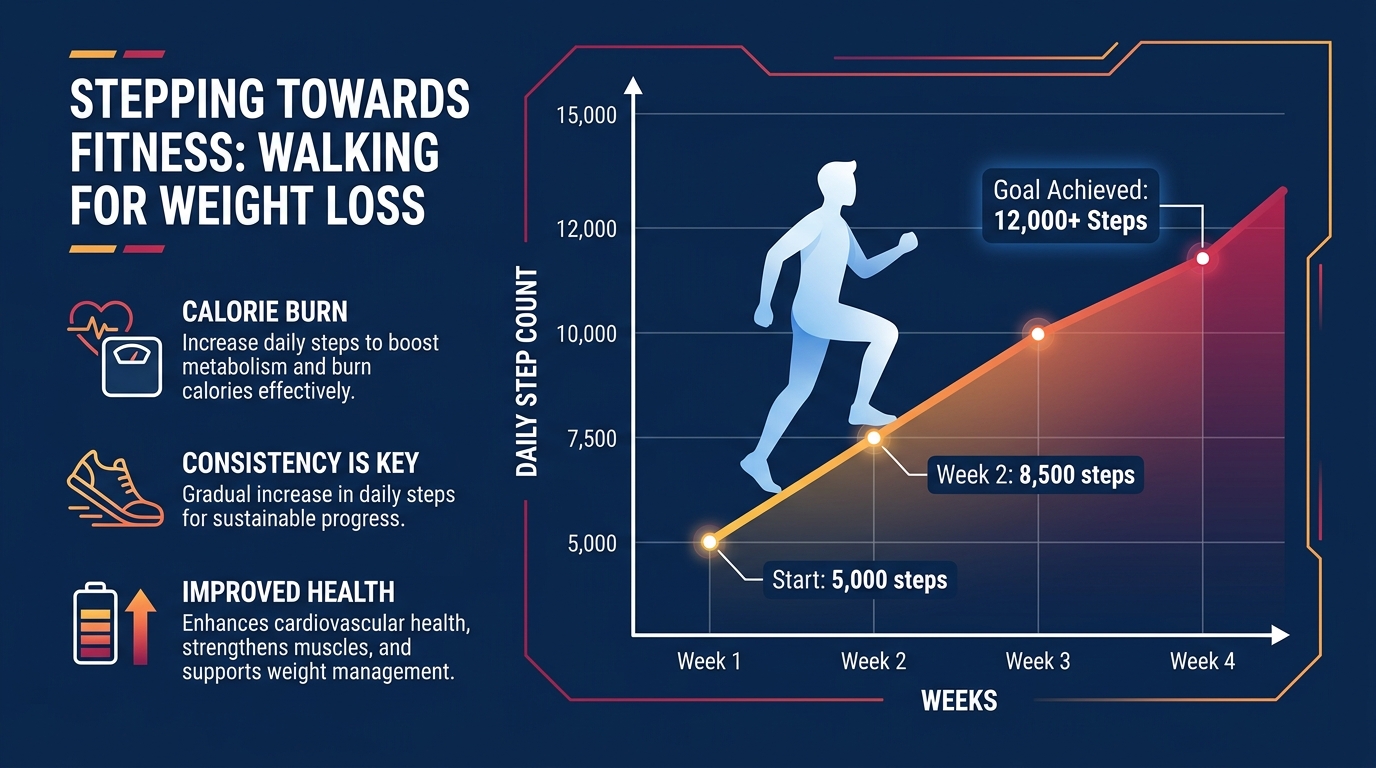
- If you’re between 5,000 and 7,000: Aim for 8,500. This is the sweet spot from the 2026 meta-analysis.
- If you’re above 7,500: Push toward 10,000 for maximum benefit, or focus on increasing walking pace.
Step 3: Add 1,000 Steps Per Week
The research shows that increasing step count gradually produces better long-term adherence than going from zero to 10,000 overnight. Add 1,000 steps per week until you reach your target.
Step 4: Walk at the Right Pace
Walking speed matters. The umbrella review found that intermediate and high walking speeds provide additional benefits beyond just step count. A brisk walk means you’re breathing harder but can still hold a conversation — roughly 3 to 4 miles per hour.
For weight loss specifically, interval walking may work even better. Walk at a moderate pace for 3 minutes, then as fast as you can for 1 minute. Repeat. A 2022 study in postmenopausal women found this approach produced greater fat loss than steady-pace walking.
Step 5: Break It Up
You don’t need to walk all at once. The American Council on Exercise confirms that splitting your walking into multiple shorter sessions produces the same results as one long walk. A 15-minute walk in the morning, another at lunch, and a 20-minute walk after dinner gets you to 50 minutes without blocking out a full hour.

Common Walking Mistakes That Slow Weight Loss
Mistake 1: Walking the Same Route at the Same Pace Every Day
Your body adapts to repetitive movement. After a few weeks, the same walk burns fewer calories because your body has become more efficient. Change your route, add hills, or mix in intervals every 3-4 walks.
Mistake 2: Thinking You Can Walk Off a Bad Diet
You can’t. A 15-minute walk reduces cravings for sugary snacks — research from the University of Exeter confirms that. But significant weight loss requires both movement and nutrition changes. Walking amplifies the effects of a healthy diet; it doesn’t replace one.
Mistake 3: Only Counting Structured Walks
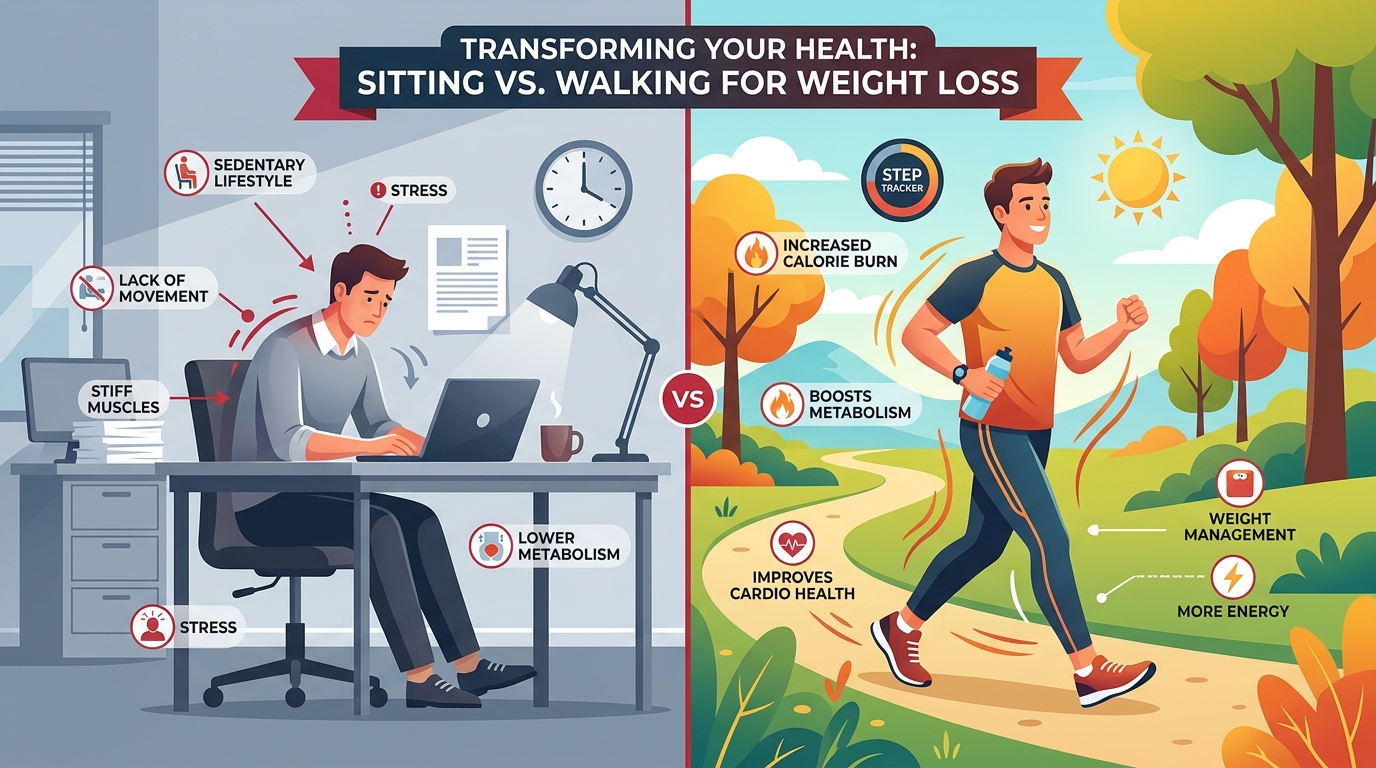
Remember NEAT? The bulk of your calorie burn comes from incidental movement — not your dedicated walk. If you walk for 30 minutes but sit for the other 15.5 hours, your total daily movement is still low. Focus on increasing movement across your entire day.
Mistake 4: Ignoring Walking Posture
Poor walking form reduces calorie burn and increases injury risk. Keep your head up, shoulders back, core engaged, and arms swinging naturally. Walking at a pace where you’re slightly out of breath — the “talk test” — is the most effective intensity for fat burning.
The Case for Walking Over Running for Weight Loss
Running burns more calories per minute. That’s a fact. But walking wins on sustainability:
- Lower injury rate: Running has a 20-80% annual injury rate among regular runners. Walking is virtually zero-impact.
- Better adherence: People stick with walking programs longer than running programs. Consistency beats intensity for weight loss every time.
- More accessible: You don’t need special clothes, a gym membership, or good weather. You can walk anywhere.
- Lower cortisol response: High-intensity exercise can spike cortisol, which encourages belly fat storage. Moderate walking keeps cortisol in check.
For most overweight or sedentary adults, walking is the smarter starting point. You can always add jogging intervals later.


Sample Walking Schedule for Weight Loss
Here’s a progressive schedule based on the research:
Week 1-2: Walk 20 minutes, 4 days/week. Target: 5,000-6,000 steps/day.
Week 3-4: Walk 30 minutes, 5 days/week. Target: 7,000 steps/day.
Week 5-6: Walk 40 minutes, 5 days/week. Add 2 interval sessions. Target: 8,000 steps/day.
Week 7-8: Walk 45-50 minutes, 5-6 days/week. Target: 8,500 steps/day.
After 8 weeks, the research suggests you can expect 4-8 pounds of weight loss, improved cardiovascular fitness, and visible reduction in waist circumference.
How Long Until You See Results?
Changes in inflammatory markers and blood sugar can appear within 2 to 4 weeks of starting a consistent walking routine. Visible weight loss typically takes 4 to 8 weeks — but don’t let that discourage you. The metabolic changes happening beneath the surface are far more important for long-term health than the number on the scale.
Research from the American Physiological Society shows that walking economy improves significantly after weight loss, meaning your body becomes more efficient at walking. This is a double-edged sword: it means you need to keep increasing your steps or pace to continue seeing results.
Frequently Asked Questions
How many steps should I walk per day to lose weight?
The best evidence points to 7,000 to 8,500 steps per day for weight loss. A 2026 meta-analysis found that 8,500 daily steps helped participants lose 4.39% of their body weight and maintain most of that loss. If you’re sedentary, start with 5,000 and work up gradually.
Can I lose belly fat by walking?
Yes. Walking reduces visceral fat — the dangerous fat stored around your organs — by improving insulin sensitivity and reducing cortisol. A 12-week walking program significantly reduced belly fat in overweight adults. Walking for weight loss around the midsection takes time, but the evidence is clear that it works.
Is walking better than running for weight loss?
It depends on your goals and fitness level. Running burns more calories per minute, but walking has lower injury rates, better long-term adherence, and is more accessible for beginners. For most people starting a weight loss journey, walking is the smarter first step.
How many calories does 10,000 steps burn?
On average, 10,000 steps burns 300 to 500 calories for most adults. A heavier person walking briskly can burn up to 600 calories. But remember — the research shows you don’t need 10,000 steps to see significant weight loss results. Consistency matters more than hitting an arbitrary target.
Can I lose weight by walking 30 minutes a day?
Absolutely. Walking 30 minutes a day at a brisk pace, five days a week, can lead to gradual weight loss — especially if you’re starting from a sedentary baseline. The American Council on Exercise recommends 45 to 60 minutes for more significant weight loss, but 30 minutes is an excellent starting point.
How fast should I walk to lose weight?
Walk at a “brisk” pace — fast enough that you’re breathing harder but can still hold a conversation. This is roughly 3 to 4 miles per hour or 100 to 120 steps per minute. Interval walking (alternating fast and moderate paces) may produce even better fat loss results.
Do I need walking shoes?
Yes. Proper walking shoes with good arch support and cushioning reduce injury risk and make walking more comfortable. Replace them every 300 to 500 miles. You don’t need expensive specialty shoes — just well-fitted walking or cross-training shoes.
The Bottom Line
The science is clear: walking is one of the most effective, sustainable, and accessible tools for weight loss. You don’t need to run marathons, join a gym, or chase an arbitrary 10,000-step target. The evidence points to 7,000 to 8,500 steps per day as the sweet spot for losing weight and keeping it off.
Start where you are. If you currently walk 3,000 steps, aim for 4,000. Add 1,000 steps each week. Focus on pace as well as count. And remember — the incidental movement throughout your day matters more than your dedicated walking session.
This article was informed by trending data from YouTube (where walking and fitness videos are surging in 2026), Google Trends (showing sustained high interest in weight loss solutions), and the latest RSS research from ScienceDaily covering step-count science. The evidence is consistent: walking works. The only question is whether you’ll start today.
Last updated: May 24, 2026

Leave a Reply